
Will Home Repairs Pay Off Before You Sell in West Volusia

Updated: 2 days ago
Before spending thousands on repairs, paint, flooring, landscaping, or a kitchen refresh, pause and ask one practical question: Will this money come back to you when the home sells?
Some repairs can help a home sell faster and for a stronger price. Others make the house look better but cost more than the buyer is willing to pay for them. In West Volusia, where buyers compare homes across Deltona, DeLand, Orange City, DeBary, Lake Helen, and nearby areas, the right answer depends on the property, the price range, and the kind of buyer most likely to make an offer.
At Circle G Land & Holdings, we help homeowners look at the options before they spend money they may not need to spend. Sometimes listing traditionally after selective improvements makes sense. Sometimes a simple cleanup is enough. Sometimes selling as-is is the better financial move.

The real question is net profit, not sale price
A higher sale price does not always mean a better outcome.
If a seller spends $20,000 to get a $15,000 higher offer, that repair plan did not pay off. If a seller spends $3,000 on cleanup, paint touch-ups, and yard work, then attracts more showings and stronger offers, that may be money well spent.
The better question is:
After repair costs, holding costs, stress, time, and selling expenses, which option leaves you with the best result?
That matters because repairs rarely happen in a vacuum. A project can uncover more issues. A contractor may need extra time. Materials may cost more than expected. While work is happening, the owner may still be paying taxes, insurance, utilities, mortgage payments, lawn care, or HOA dues.
For some homes, repairs create real value. For others, they only make the house more pleasant while reducing the seller’s net profit.
Repairs that usually matter most to West Volusia buyers
Buyers tend to care most about repairs that affect safety, financing, insurance, and the ability to move in without immediate problems. Cosmetic upgrades can help, but only after the basics feel sound.
Roof condition can shape the whole sale
In Florida, the roof often gets special attention. Buyers, lenders, and insurance companies may all care about roof age and condition.
A roof near the end of its life can affect:
Buyer confidence
Insurance options
Loan approval
Inspection negotiations
Final sale price
That does not mean every seller should automatically replace the roof before listing. Roof replacement is expensive, and the value returned depends on the home’s price, condition, and buyer pool.
If the roof has active leaks, missing shingles, or visible damage, it deserves a closer look before listing. If the roof is older but functional, a seller may compare three paths:
Option | When it may make sense | Possible drawback |
Replace the roof before listing | The home is otherwise updated and likely to attract retail buyers | High upfront cost |
Offer a credit or price adjustment | Buyers are interested but concerned about cost | Some lenders or insurers may not accept this |
Sell as-is | The seller wants speed, certainty, or no repair burden | The offer may reflect the roof risk |
The right choice depends on the numbers, not guesswork.
HVAC, electrical, and plumbing issues affect confidence
A buyer can live with outdated cabinet pulls. They worry more about air conditioning, electrical panels, water heaters, and plumbing leaks.
In West Volusia, air conditioning is not a luxury. A non-working or unreliable HVAC system can make buyers nervous, especially during hot months. Plumbing leaks, slow drains, or signs of water damage can also raise concerns because buyers may wonder what else is hidden.
Electrical issues are similar. Outdated or unsafe electrical components can affect inspections and insurance. If a repair is small and clear, it may be worth doing. If the system needs larger work, the seller should compare the repair cost against an as-is sale or negotiated credit.
Water damage should not be ignored
Stains on ceilings, soft flooring, musty smells, and bubbling paint all make buyers slow down. Even if the problem was fixed years ago, visible signs of past water damage create doubt.
Before listing, it often helps to answer these questions:
Is the source of the water problem fixed?
Is there documentation of the repair?
Does the damage still look active?
Would a buyer assume the worst?
If the issue is minor and resolved, repairing the visible damage may help. If the issue is active or extensive, sellers should be careful about spending money on surface-level fixes that do not solve the cause.

What Does the Research Say About Repairs Before Selling?
Not every home improvement delivers the same financial return. According to the National Association of REALTORS® 2025 Remodeling Impact Report, some smaller improvements may recover a greater percentage of their costs at resale than major renovations.
However, these findings reflect national trends, not guaranteed results for individual properties in Deltona, DeLand, or the surrounding West Volusia communities. Before investing in repairs, consider your home's current condition, what local buyers expect, and how much of that investment you're realistically likely to recover.
The goal isn't necessarily to sell a perfect house. It's to make informed decisions about which improvements actually pay off, and which ones may be better left to the next owner.
Cosmetic repairs can help, but only when they are selective
Cosmetic work is where sellers often overspend. New flooring, fresh paint, modern fixtures, and updated counters can make a home feel more appealing. They can also turn into a long list of expenses that do not fully come back at closing.
The key is to focus on simple improvements that make the home feel cleaner, brighter, and easier to imagine living in.
Paint is often one of the safer improvements
Fresh interior paint can make a home feel cared for, especially if the current colors are dark, worn, or highly personal. Neutral paint helps rooms photograph better and gives buyers fewer distractions.
That does not mean every room needs a full repaint. Sometimes touch-ups are enough. Other times, repainting the main living areas creates the biggest impact.
Good candidates for paint include:
Scuffed hallways
Dark accent walls
Bedrooms with bold colors
Trim with visible wear
Entry areas that shape the first impression
This is usually about making the home feel clean, not making it look custom.
Flooring depends on condition and consistency
Bad flooring can hurt a showing. Stained carpet, broken tile, warped laminate, and mismatched patches can make buyers mentally subtract repair costs.
Still, replacing all flooring before selling can be risky. Buyers have different tastes. A seller might install something new, only for the buyer to prefer a different style.
A more measured approach may work better:
Deep clean carpets if they are in decent condition
Replace badly stained carpet in key rooms
Repair obvious trip hazards or broken pieces
Avoid high-end flooring unless the home’s price range supports it
If the house needs a full flooring replacement and other major repairs too, selling as-is may be more practical.
Kitchens and bathrooms need caution
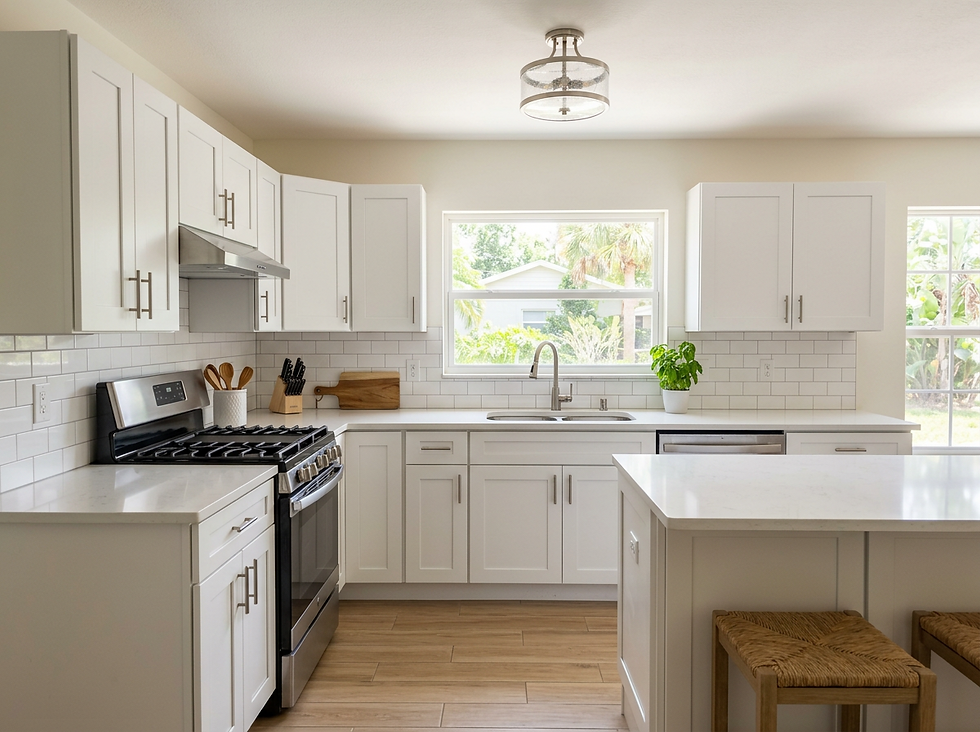
Kitchens and bathrooms influence buyer interest, but full remodels before selling can be expensive and stressful. A seller may not recover the full cost, especially if the buyer would have chosen different finishes.
Small updates can make more sense:
Replace worn cabinet hardware
Install a clean, simple faucet
Re-caulk tubs and showers
Repair loose toilets or leaking sinks
Replace broken light fixtures
Clean grout and remove clutter
A dated but clean kitchen is easier to sell than a half-renovated one. If the kitchen needs major work, price and strategy matter more than trying to create a dream kitchen for an unknown buyer.
Curb appeal still matters because buyers judge quickly
The first impression starts before anyone opens the front door. In West Volusia, that often means the yard, driveway, front entry, roofline, exterior paint, and porch area.
Curb appeal does not need to be expensive. Basic cleanup can go a long way.
Focus on the obvious:
Mow and edge the lawn
Trim shrubs away from windows
Remove dead plants
Pressure wash walkways if needed
Clean the front door area
Replace a broken porch light
Remove debris, old furniture, or unused items from the yard
These tasks help buyers feel like the home has been maintained. They also help listing photos look better.
Large landscaping projects are different. New sod, major tree work, irrigation repairs, and elaborate plantings can add up fast. Do the math before assuming the yard needs a full makeover.

Repairs that often do not pay back enough
Some repairs feel productive but may not improve the bottom line. They can still be worthwhile if the seller wants to enjoy the home before moving, but they may not be the best pre-sale investment.
Full luxury remodels are risky before selling
High-end finishes are personal. One buyer may love quartz counters and matte black fixtures. Another may prefer a different style. If a seller spends heavily on a luxury remodel, the buyer may not value the choices at the same level.
This is especially true when the rest of the home still needs work. A brand-new kitchen next to old flooring, an aging roof, and outdated bathrooms can make the property feel uneven.
Projects with hidden costs can grow quickly
Some repairs start small and expand. A bathroom update can reveal plumbing issues. Flooring replacement can expose subfloor damage. Exterior repairs can uncover wood rot.
Before starting any project, build in room for surprises. If the budget only works if everything goes perfectly, the risk may be too high.
Personal taste upgrades rarely appeal to everyone
Bold tile, unusual paint colors, custom built-ins, themed rooms, and specialty fixtures may fit one owner’s style but narrow the buyer pool.
When selling, broad appeal usually beats personal taste. Clean, functional, and neutral tends to work better than highly customized.
How to decide whether to repair, sell as-is, or list traditionally
There is no single answer for every home. The best choice comes from comparing realistic options side by side.
Start with the current condition
Walk through the home like a buyer. Better yet, ask someone who will be honest. Look for the things that would make a buyer hesitate.
Pay attention to:
Strong odors
Active leaks
Roof concerns
HVAC problems
Damaged flooring
Peeling paint
Cracked windows
Overgrown landscaping
Signs of pests
Safety hazards
Separate the list into two groups: must-address issues and optional improvements.
Estimate true repair costs
A repair budget should include more than the contractor’s quote. It may also include permits, materials, cleanup, temporary housing, storage, missed work, or extra months of carrying costs.
If the home is vacant, every extra month on the market can add expense. If the seller lives in the home, repairs can disrupt daily life.
A lower-stress option may be worth considering even if the sale price is lower.
Compare likely buyer types
Not every buyer wants the same thing.
A retail buyer usually wants a move-in-ready or mostly finished home. This buyer may pay more, but they may also ask for repairs, concessions, inspections, and financing terms.
An investor or cash buyer may accept more repairs and close faster. The offer may be lower, but the seller may avoid repair costs, showings, delays, and uncertainty.
A buyer looking for a project may fall somewhere in the middle. They may want a discount but still need the home to meet loan and insurance requirements.
Look at net proceeds
The cleanest comparison is not sale price. It is estimated net proceeds.
Use a simple framework:
Path | Costs to include | Questions to ask |
Repair before listing | Repairs, time, carrying costs, selling costs | Will the higher price exceed the added costs? |
List with limited updates | Cleaning, small repairs, possible buyer credits | Will the home show well enough to compete? |
Sell as-is | Lower offer, fewer upfront costs | Is speed and certainty worth the price difference? |
This is where an honest evaluation can save money. Guessing can lead to repairs that feel useful but do not improve the final result.

When selling as-is may be the smarter move
Selling as-is does not mean the home has no value. It means the seller is choosing not to take on repairs before the sale.
This can make sense when:
The home needs major repairs
The seller does not have cash available for improvements
The property is inherited or vacant
The owner needs to move quickly
Repairs would take too long
The home has insurance or financing challenges
The seller wants fewer showings and less negotiation
An as-is sale can also help when the repair list is uncertain. Instead of opening walls, replacing systems, or managing contractors, the seller can let the buyer take on the work after closing.
The tradeoff is price. As-is buyers account for risk, repairs, and resale costs. Still, the lower price may produce a better net result if it avoids large upfront spending and months of delay.
When repairs before listing may be worth it
Selective repairs can be a good choice when the home is already close to market-ready.
Repairs may pay off when:
The issue is inexpensive and highly visible
The repair removes a major buyer objection
The home is in a price range where buyers expect move-in-ready condition
The work can be finished quickly
The seller has reliable contractors
The likely sale price increase is greater than the cost
For example, replacing a broken front door handle, fixing a leaking sink, repainting a dark living room, or cleaning up the yard may help buyers focus on the home instead of small problems.
The best pre-sale repairs are usually simple, visible, and practical.
Circle G Land & Holdings can help you compare the options
Before spending thousands on a roof, flooring, paint, landscaping, or remodeling, get a clearer picture of what the investment may actually do for your sale.
Circle G Land & Holdings helps homeowners evaluate three common paths:
Selling the home as-is
Making selective improvements before selling
Listing traditionally when the property is a good fit
The goal is not to push every seller toward one answer. The goal is to help homeowners make an informed decision before committing money, time, and energy to repairs.
This kind of review can be especially helpful if the property needs work, has been inherited, has tenants, has insurance concerns, or has been sitting vacant.
The best repair plan is the one that protects your bottom line
Home repairs can pay off before selling, but only when they solve the right problem at the right cost. A fresh coat of paint may help. A major remodel may not. A roof issue may need serious attention. New luxury finishes may simply reduce your profit.
Before starting projects, compare the likely return, the time involved, the stress, and the type of buyer your home is most likely to attract.
If the numbers support repairs, make them selectively. If they do not, selling as-is or listing with a clear pricing strategy may be the smarter move. The best decision is the one that leaves you with the strongest net result, not just the highest possible sale price.

Comments